Science & technology
Quantum Computers: How the Technology Works and Where It Is Already Used
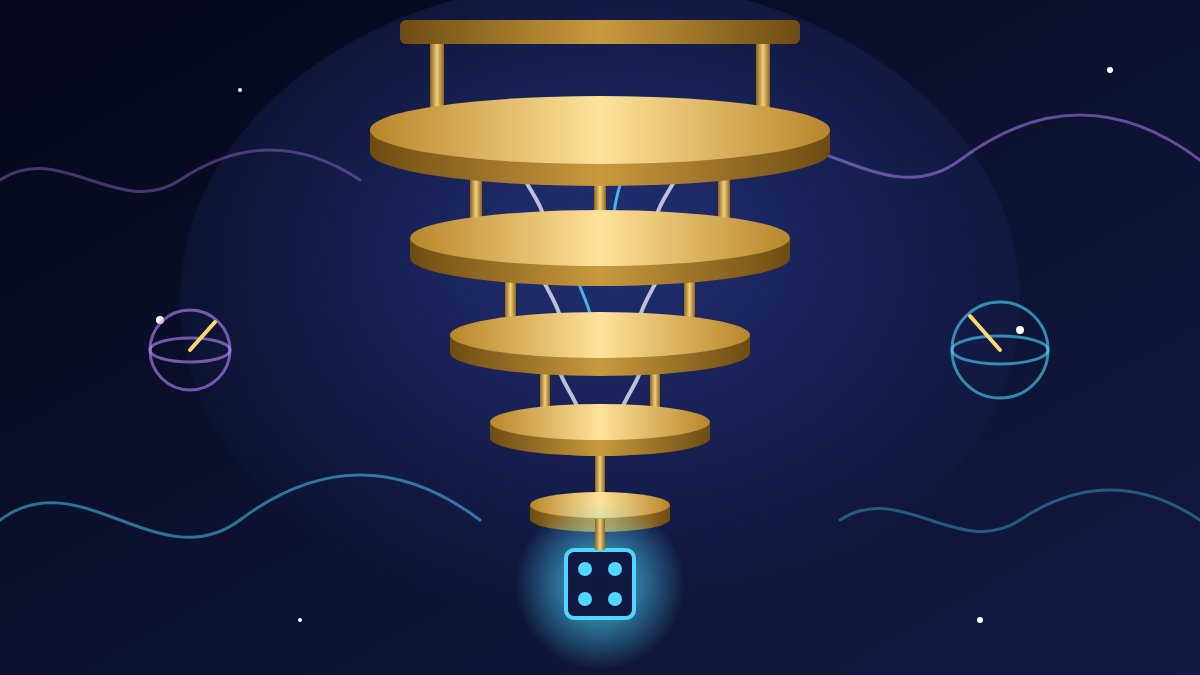
Quantum computers are often described as “machines that will solve any problem instantly”. The reality is more complex and more interesting. A quantum computer is not a faster version of an ordinary computer but a fundamentally different way of computing, based on the laws of quantum mechanics. For some problems it may offer an enormous speed-up; for others it may be useless.
Here is how the technology works, where it stands today and where it is already used in practice.
The qubit: how it differs from a bit
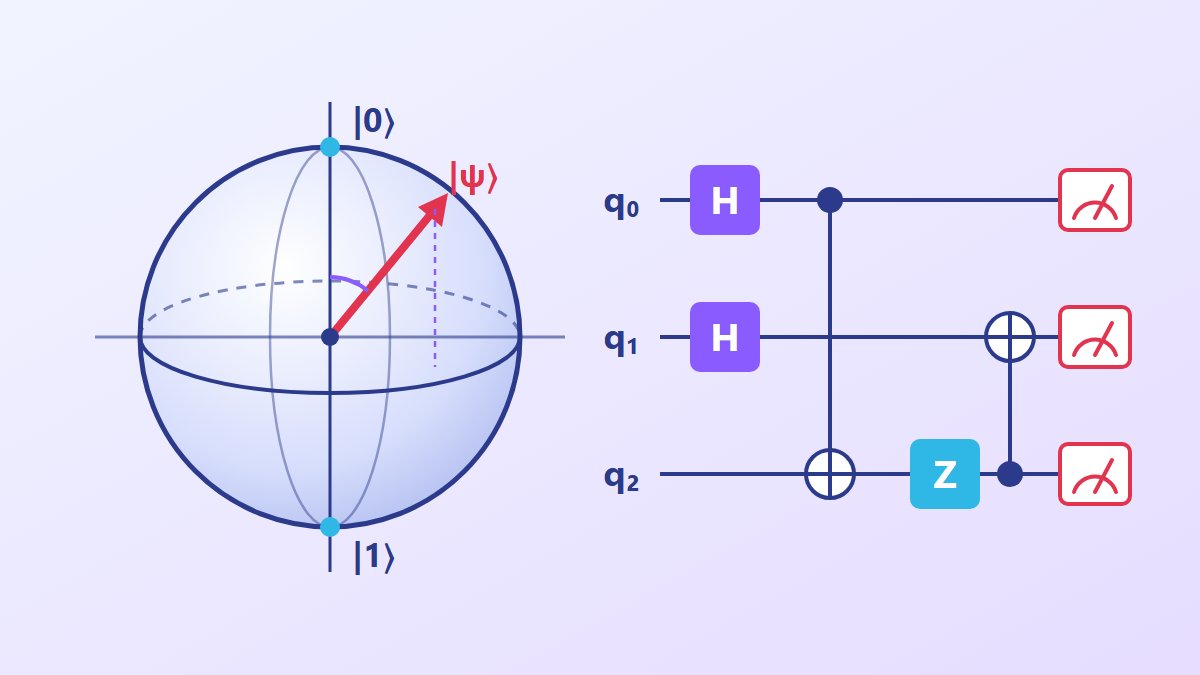
A classical bit is either 0 or 1. A qubit — a quantum bit — can be in a superposition: a combination of the states 0 and 1 at the same time, each with a certain amplitude. When measured, the superposition “collapses” and we get 0 or 1 with the corresponding probability.
The second key phenomenon is entanglement. Entangled qubits form a single system: the state of one cannot be described separately from the other. The third is interference: quantum algorithms are designed so that the probabilities of wrong answers cancel out while those of the right answers are amplified.
Thanks to these effects, n qubits are described by 2ⁿ amplitudes. Just 300 perfect qubits correspond to more states than there are atoms in the observable universe.
How a quantum computer is built
Creating a stable qubit is an extremely difficult engineering challenge. Several physical platforms are currently competing:
- Superconducting qubits — circuits cooled in a cryostat to hundredths of a degree above absolute zero. They are developed by IBM, Google and other companies.
- Trapped ions — individual charged atoms held by electromagnetic fields and controlled by lasers. They are known for very high operation fidelity.
- Neutral atoms — arrays of atoms held in “optical tweezers” that scale well to hundreds and thousands of qubits.
- Photonic systems — qubits are encoded in particles of light and can operate at room temperature.
A computation is written as a quantum circuit — a sequence of gates that rotate qubit states and entangle them with each other — after which the result is read out by measurement.
The main problem: errors and decoherence
Qubits are extremely sensitive to noise: heat, vibration and electromagnetic interference destroy the quantum state within fractions of a second. This is called decoherence. That is why the industry’s central task is quantum error correction: many physical qubits are combined into one fault-tolerant logical qubit.
In 2024 Google demonstrated on its Willow chip that as such a group of qubits grows, the error rate falls rather than rises — an important milestone on the road to scalable machines. Major players have published roadmaps suggesting that the first fault-tolerant quantum computers could appear towards the end of the decade.
Where quantum technology is already used
There is no universal quantum computer yet, but researchers and companies can access real quantum processors via the cloud. The most promising areas are:
- Chemistry and materials — simulating molecules to develop drugs, catalysts and batteries. Nature is quantum, and a quantum computer describes it most naturally.
- Optimisation — logistics routes, scheduling and resource allocation in power grids.
- Finance — risk assessment and portfolio optimisation using Monte Carlo methods.
- Quantum sensors — ultra-precise magnetometers, gravimeters and clocks already used in geology, medicine and navigation.
- Quantum communication — quantum key distribution systems for secure data transfer.
The quantum threat to encryption
Shor’s algorithm would in theory allow a large fault-tolerant quantum computer to break the widely used RSA and ECC encryption schemes. That is why the world is moving to post-quantum cryptography in advance: in 2024 the US National Institute of Standards and Technology (NIST) approved the first post-quantum standards (FIPS 203, 204 and 205). Banks, messengers and operating systems are already adopting the new algorithms to protect data against “harvest now, decrypt later” attacks.
Frequently asked questions
Will we have quantum computers at home?
Not in the foreseeable future. Quantum processors will remain a cloud service working alongside classical supercomputers, and users will get the results through their everyday devices.
Will quantum computers replace ordinary ones?
No. They will be accelerators for a narrow class of problems — just as GPUs complement CPUs today rather than replace them.
Quantum computing is moving from scientific experiment to engineering. Years of work on qubit stability still lie ahead, but the technology is already changing cryptography, materials science and the approach to complex calculations. And networks such as 6G are being designed with post-quantum security in mind from the outset.